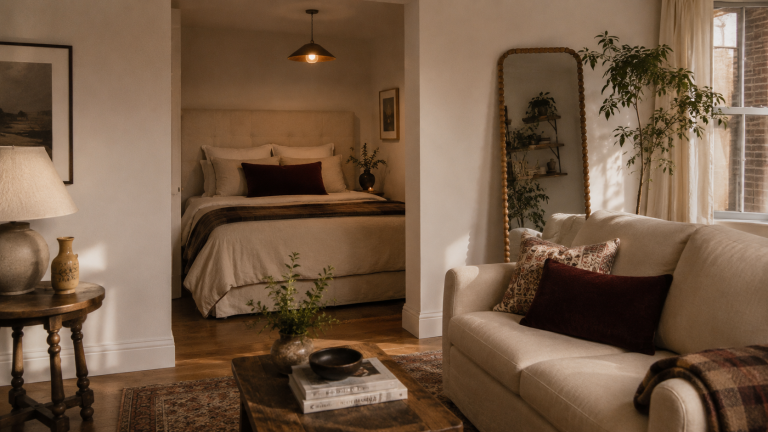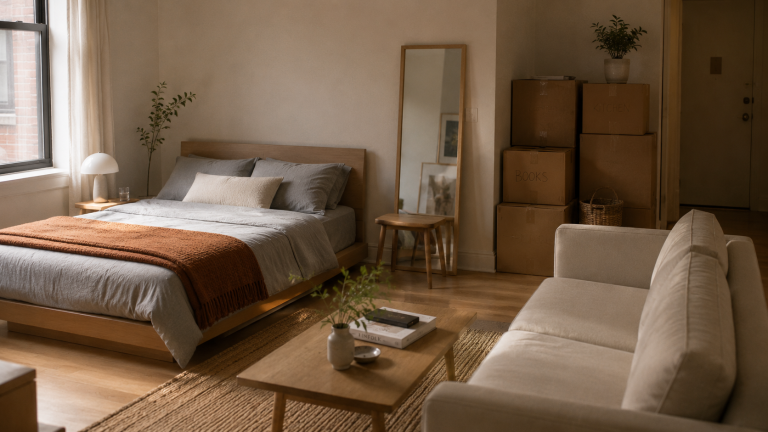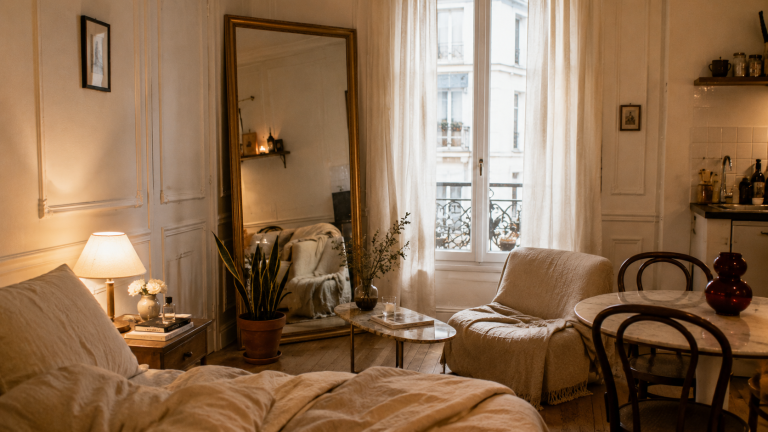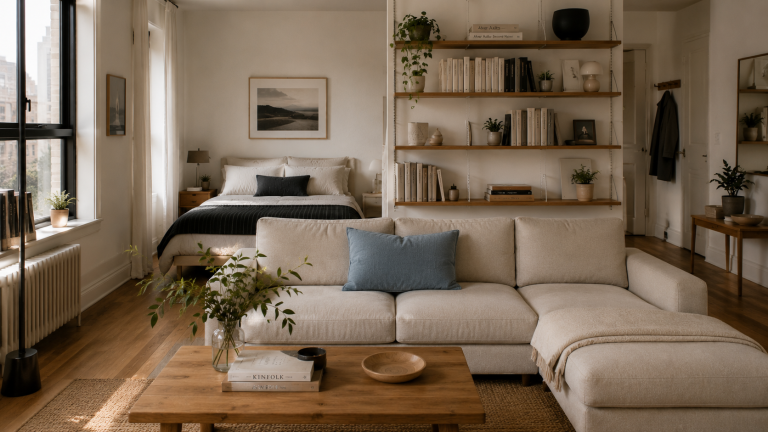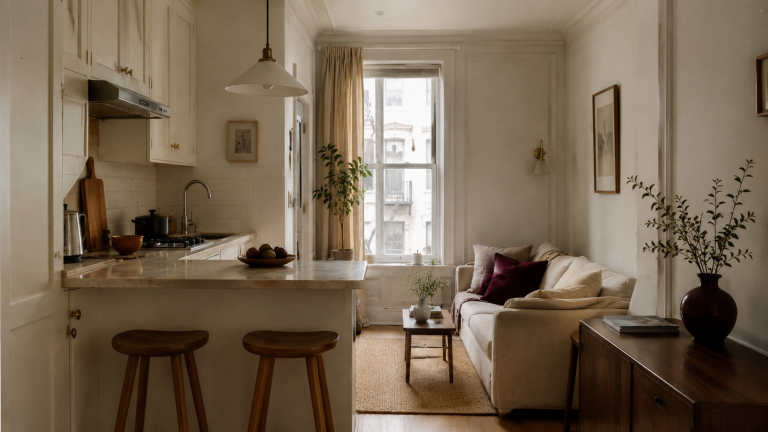
Tiny Studio Apartment Decorating Ideas
For the first few months in my current studio, I kept buying storage. A cart here, a set of bins there, a shelf I didn’t need but that promised to “solve” the room. The apartment didn’t feel any bigger; it felt more organized and exactly as small. What actually changed things wasn’t storage at all. It was one big mirror and swapping my ceiling light for two lamps. Turns out the thing tiny apartments are usually missing isn’t more places to put stuff. It’s breathing room.
Key Takeaways
- The single biggest lever for a tiny studio is visual breathing room, not more storage.
- Use vertical shelving above the height that feels natural: most studios waste that space entirely.
- One large, well-placed mirror does more than several small decorative ones.
- Layered lighting (ambient, task, accent) makes a small space feel intentional, not flat.
- Japandi and warm minimalism are the most forgiving styles for small footprints.
The One Principle Everything Else Follows
Before any specific tip, it’s worth naming the idea underneath all of them: a tiny studio needs visual breathing room more than it needs storage capacity. Every choice below (the mirror, the shelving height, the color, the lighting) is really just a different way of creating that same sense of space.
Go Higher Than Feels Natural
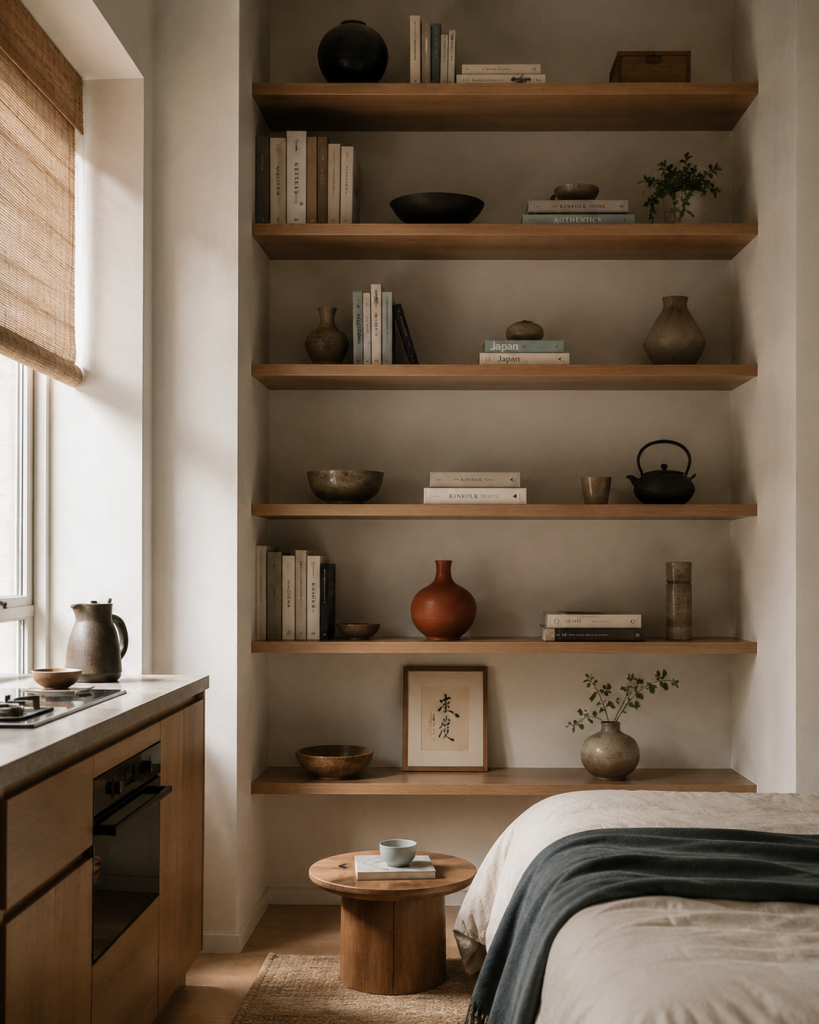
Most tiny apartments waste everything above about eye level. A shelf mounted higher than feels intuitive (closer to the ceiling than you’d first reach for) uses square footage nobody else is competing for. It’s the easiest “extra room” you’ll ever add, and it costs one shelf and one weekend afternoon.
Get the Mirror Right
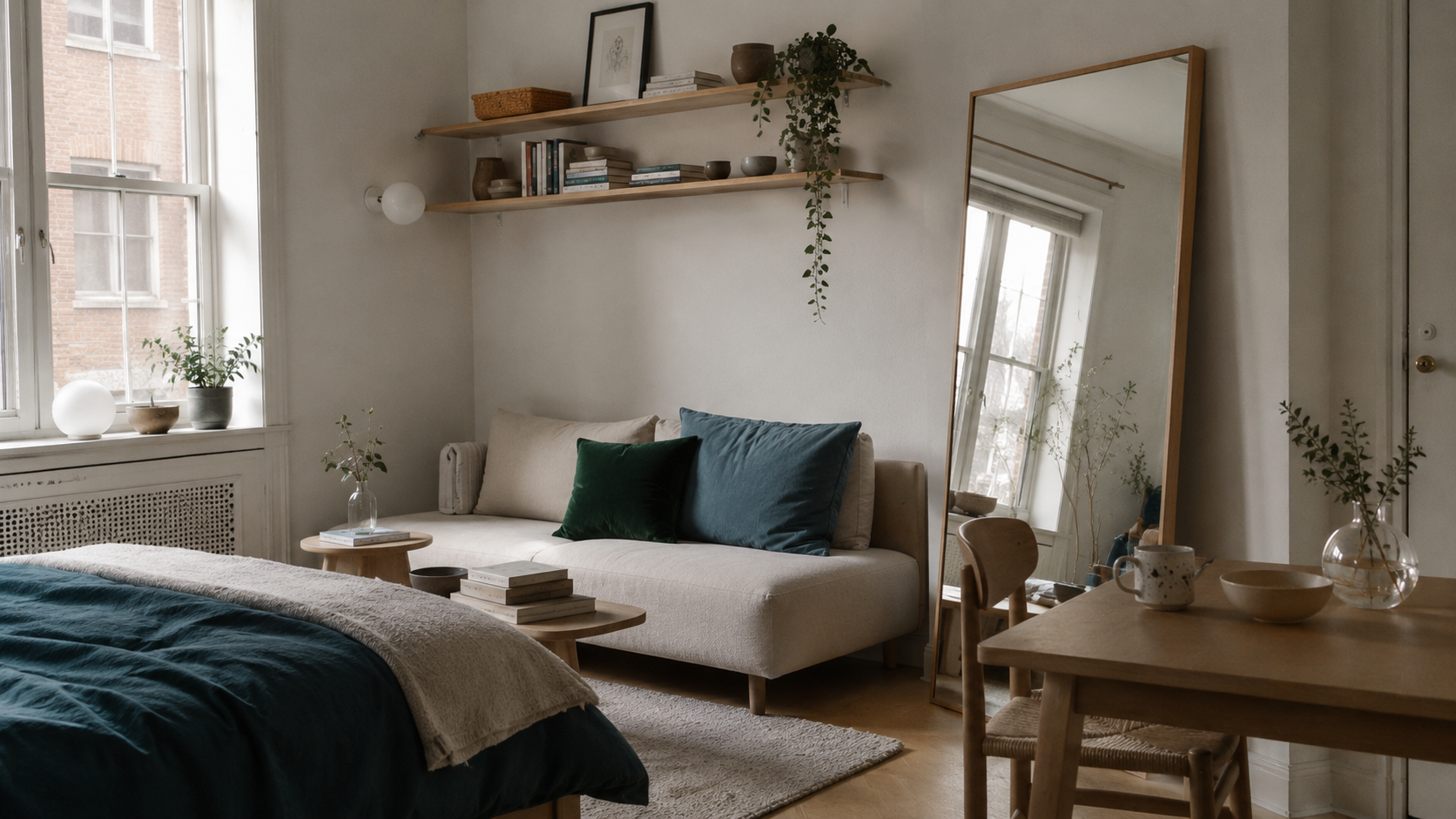
One large mirror, at minimum around 32 by 47 inches, does more for a small space than three small decorative ones scattered around. But placement matters more than size: avoid hanging it directly opposite the bed (visually disruptive, especially at night), avoid pointing it at anything cluttered (it just doubles the clutter), and avoid mounting it above eye level (it reflects ceiling instead of room). Get it right (usually opposite a window, at a height where it actually reflects the space) and it’s the closest thing to buying square footage.
Zone With Decor, Not Walls
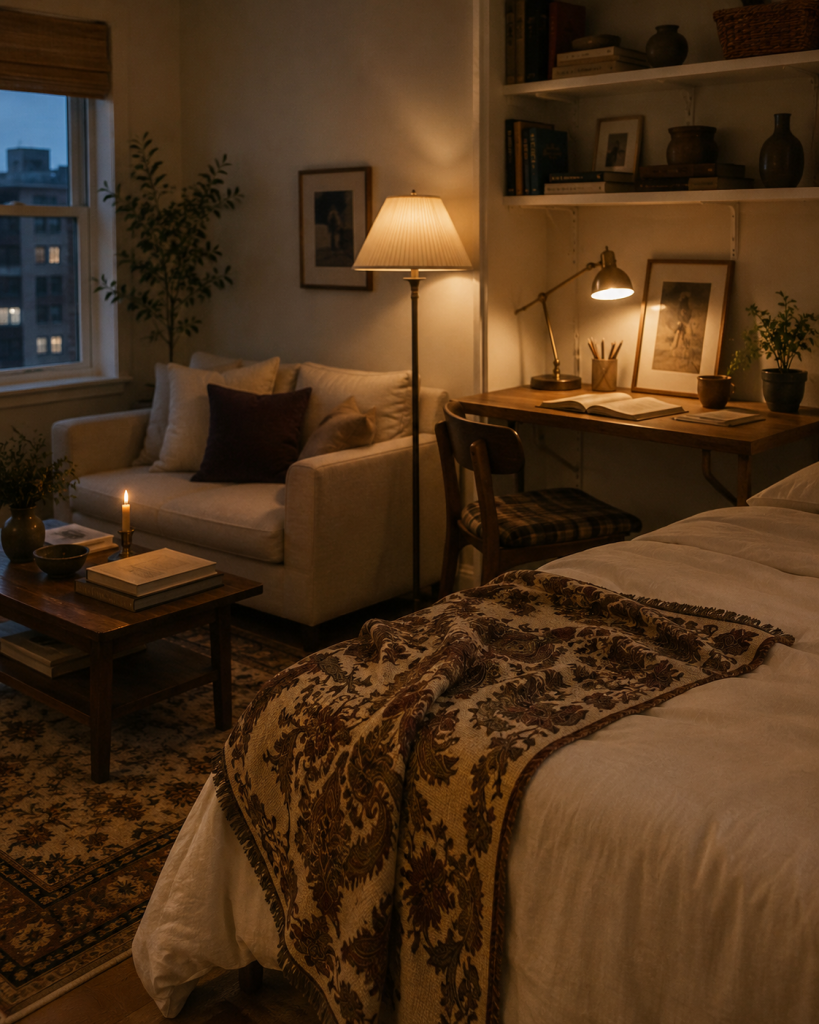
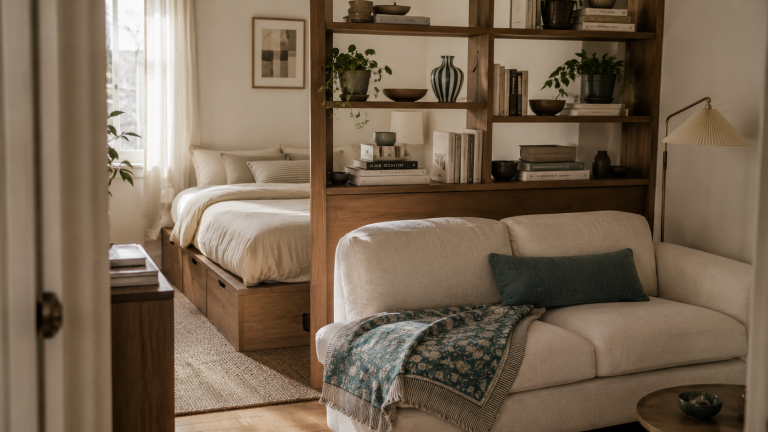
A rug under the seating area, a different lighting temperature in the sleep corner, furniture angled just slightly instead of squared to the walls: these small signals tell your eye “this is a different zone” without a single wall going up. It’s the same logic that makes an open-plan studio read as more than one room.
Color: Light Walls, One or Two Accents
Keep the walls light; it’s what keeps the layout feeling airy instead of closed in. Then use one or two accent colors, in textiles or art, to keep the room from feeling sterile. This is also where you get to have fun: a single saturated color, used consistently across a throw pillow, a vase, and a piece of art, reads as intentional. Five different accent colors scattered around reads as leftover.
Layer Your Light
A single overhead light is the fastest way to make any room, tiny or not, feel like a waiting room. Layering ambient light (a floor lamp), task light (something focused over a desk or reading chair), and a little accent light (a smaller lamp or even candles) does more to make a studio feel lived-in than almost any furniture purchase. Add dimmers if you can; the same room can feel completely different at 6pm versus 10pm.
“Turns out the thing tiny apartments are usually missing isn’t more places to put stuff. It’s breathing room.”
The Style That Suits Small Spaces Best
If you’re choosing a decorating direction and not sure where to land, Japandi and warm minimalism are the most forgiving styles for a tiny footprint: low furniture, natural materials, and negative space that doesn’t compete with the room’s size. It’s also, not coincidentally, close to the aesthetic we lean on throughout this site.
For hands-on projects that put these ideas into practice, our DIY decor guide is the project-based companion to this piece. And if storage is still nagging at you despite everything above, studio apartment closet ideas covers that specifically.
FAQ
How do you make a tiny studio apartment feel bigger?
Short answer: Prioritize visual breathing room (light walls, one large mirror, and vertical shelving) over adding more storage furniture.
Where should you not place a mirror in a studio apartment?
Short answer: Avoid directly opposite the bed, facing a cluttered area, or hung above eye level.
What decorating style works best for small studio apartments?
Short answer: Japandi or warm minimalism, using low furniture, natural materials, and negative space that doesn’t compete with the room’s size.